Random Thought Of The Day: Welcome Back, And HTML, Too


Affordable Care Act:

How to Make the Real Fix

I originally penned this short introspection at a rather contentious point in the government debate over the state of health care in America. While I never planned to share it publicly, I have since decided to do so only because it is fairly well written, and I wanted to practice with content that was more interesting to read than “lorem ipsum.” Whether you appreciate the substance or the framework behind it, enjoy.

The problem with the Affordable Care Act isn’t simply the provision (or lack) of insurance itself, but rather, lies in the practices and habits of Americans that force us to rely on health care in the first place.

A major aspect of the affordable care act should focus not just on providing health coverage for all, but also on providing guidance and reform on proper habits and lifestyles for all. While living in Japan for five years, I came to know very well a system which provided an affordable public option, based upon your income over the Japanese fiscal year, and recalculated on a year-to-year basis. While it was certainly reassuring to see that even in the poor rural area where I lived, regular folks (like the senior citizens operating their main-street retail shops more out of boredom nostalgia than for income, or the young day-laborers making under 1000 dollars a month) could afford to head to the doctor on a regular basis and have their issues looked at without losing an arm and a leg, what struck me more was the way in which societal norms promoted general health and fitness from a very young age.

Numerous studies have shown that promoting healthy attitudes and behaviors from a young age tends to lead to healthier and happier adults. If it promoted the adoption of healthy attitudes and practices as a matter of course and not a choice, the Affordable Care Act would stand as a stronger tool for reshaping health as opposed to simply health care in America.

-Namakemono

The Lazy Man’s Manifesto

Anonymous Is Challenging American Political Tyranny With Its’ Million Mask March On Washington, D.C.

7o_625458

Hactivist collective Anonymous has decided enough is enough, and that it’s time for Americans (and sympathetic others around the world) to stand up and reclaim their government from the clutches of corrupt politicians who espouse tyranny. The group announced that on November 5th, it will hold a “million mask march” in which they expect hundreds of thousands of participants to descend upon over 400 locations, including Washington, D.C., in an expression of solidarity against oppression and despotism.

Participants are encouraged, though not required, to don masks featuring the likeness of Guy Fawkes, known for his involvement in the Gunpowder Plot. Originally seen as a symbol of treachery, popular culture eventually rewrote his legacy as that of a hero fighting against the unjust, and November 5th   was designated Guy Fawkes Day. The 2006 film V for Vendetta gave us the popular stylization of his visage, and Anonymous eventually appropriated this mask and the date for its own purposes.

The main event is scheduled to occur at the Washington National Monument, evoking memories of well-known gatherings such as the legendary March on Washington for Jobs and Freedom, and countless other Million [insert noun here] Marches.

Exactly what Anonymous hopes to achieve through this march is unclear, beyond expressing its discontent with the state of affairs in the American government. However, the group is known for its decentralized and laissez-faire approach to organization, and the march may signal its shift towards a more clearly identified and focused agenda. It will also serve as a litmus test, gauging the eagerness of Americans to commit to another Occupy Wall Street style movement.

Ultimately though, it’s difficult to imagine the group scoring a clear and significant victory with this march. While most Americans are fed up with the political antics that have caused a never ending governmental stalemate, there is no acute impetus novel enough to rally around, as with the Great Recession and the Tea Party movement in 2009, or the global crescendo of political instability which lead to the Arab Spring and Occupy Wall Street movements. Furthermore, even with the massive support, publicizing, and dissemination of its objectives, Occupy Wall Street has all but disappeared, and it failed to accomplish its major goals. Anonymous shares many of these goals, but has none of the momentum behind it, or a real platform from which to combat the financial and political discrepancies plaguing the nation (because let’s be honest, it’s going to take a lot more than hacks and DDoS attacks to fix our problems).

Still, if Anonymous is serious about revamping its approach and transforming into a more effective political action group, it has picked a uniquely Millennial approach for doing so, creating a cultural mashup of a call to action. So as Guy Fawkes, V, or Anonymous might say, “Remember, remember, the 5th of November,” and keep fighting for your inalienable rights. The status quo is betting that you won’t.

Published on .Mic , November 1, 2013


-Namakemono

Violent Video Games Did Not Make Aaron Alexis a Cold Blooded Killer

Image

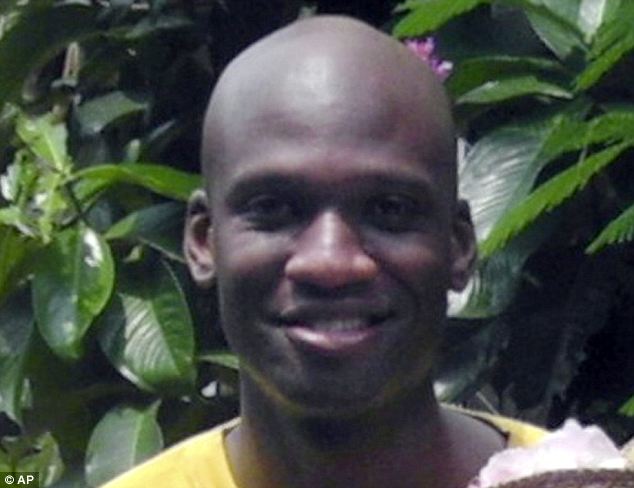
By now it’s likely that you’ve heard the unfortunate news about Monday’s mass murder at the Washington Navy Yard.  You’ve probably seen images of the man responsible, Aaron Alexis, and collected bits and pieces of information as it was made available. You may know that 13 people, including the gunman died. Maybe you’ve also learned that several people were injured as well, and watched their names scroll by on your television as the political pundits of the evening emotionlessly expressed their “heartfelt” sympathy and outrage.  Perhaps you’ve also been told that Alexis was an avid, almost obsessive player of violent video games, which may have caused him to commit this mass murder.

It is an undeniable fact that Alexis is a killer, guilty of murdering 12 innocent people and injuring several others who were simply in the wrong place at the wrong time, and it would be an insult to them to say anything otherwise. To suggest, however, that a video game or other form of entertainment is ultimately responsible for his heinous act is an insult to innocent Americans and an irresponsible denial of the ramifications of our overzealous gun culture.

Video games, music, films, and indeed most forms of media have been the target of censorship for probably as long as these methods of sharing stories have existed. Looking back over the lifetime of most millennials, you’ll see the introduction of restrictions upon music with explicit lyrics, content ratings for television shows and video games, and going back to the first half of the 20th century, rating systems for films as well.

Many of these were created with the goal of preventing content deemed unsatisfactory from influencing the attitudes, opinions, and behaviors of American society. For example, the parental advisory label which can be found on many albums today is a reaction to content from artists such as Prince and Ice-T, which were often derogatory and featured vivid depictions of violence and sexuality. At the time, leaders of the movement in favor of these labels, such as Tipper Gore, argued that being exposed to these vivid depictions would result in an increase of violence and a loosening of sexual morality amongst American youth.

While this could be true, the fact of the matter is that worldwide, most millenials, having grown up steeped in technology, have found ample opportunity to listen to whatever music they want, play whatever games they like, and indeed consume whatever media they choose despite the restrictions placed upon them. What is dramatically different in America, compared to other countries, is the level of real world violence that occurs around them.

Take Japan for example. In 2012, at least five of the top thirty best-selling video games were from franchises known for their violent themes and depictions of explicit behavior. Resident Evil 6 was the fifth most popular game that year. However, there are nearly 200 times more murders with firearms in America than Japan. In 2002, there were 47, compared to 9369 in America. The overall crime rate is significantly lower as well. The same goes for Great Britain. In fact, there are nearly 670 times more murders with firearms in America than Britain.  If Japanese and British citizens, and indeed people from any other country are for the most part consuming the same types of media, yet live with significantly lower murder rates, then the problem isn’t the entertainment, but clearly the culture of violence, or lack thereof.

In five years of living in Japan, I noticed that more people were genuinely concerned when a local convenience store was robbed at knifepoint, than at home in the Bronx when a shooting occurred in front of the local bodega. There was a desire to ensure that everyone involved was alright, and it was entirely unthinkable that something of this nature could ever happen. This is because from a young age, Japanese people are taught to respect each other and to resolve their issues through working together. More importantly, guns are outright illegal, and the concept of achieving your goals at the expense of another person’s safety or wellbeing is not accepted.

In fact, in America, it is the ease with which we accept real life violence and the eagerness to hurt others in order to secure our own prosperity that is in large part responsible for situations like that at the Washington Navy Yard. America is an incredible country and our free spirit is a large part of what made America what it is today, but without change, it will crumble apart from the inside out. Moving forward, Americans must stop blaming films and video games for the violent incidents that time and again hit the nation at its core, and learn to embrace the best practices of our global neighbors.

Published on .Mic

-Namakemono