Random Thought Of The Day: Welcome Back, And HTML, Too


Affordable Care Act:

How to Make the Real Fix

I originally penned this short introspection at a rather contentious point in the government debate over the state of health care in America. While I never planned to share it publicly, I have since decided to do so only because it is fairly well written, and I wanted to practice with content that was more interesting to read than “lorem ipsum.” Whether you appreciate the substance or the framework behind it, enjoy.

The problem with the Affordable Care Act isn’t simply the provision (or lack) of insurance itself, but rather, lies in the practices and habits of Americans that force us to rely on health care in the first place.

A major aspect of the affordable care act should focus not just on providing health coverage for all, but also on providing guidance and reform on proper habits and lifestyles for all. While living in Japan for five years, I came to know very well a system which provided an affordable public option, based upon your income over the Japanese fiscal year, and recalculated on a year-to-year basis. While it was certainly reassuring to see that even in the poor rural area where I lived, regular folks (like the senior citizens operating their main-street retail shops more out of boredom nostalgia than for income, or the young day-laborers making under 1000 dollars a month) could afford to head to the doctor on a regular basis and have their issues looked at without losing an arm and a leg, what struck me more was the way in which societal norms promoted general health and fitness from a very young age.

Numerous studies have shown that promoting healthy attitudes and behaviors from a young age tends to lead to healthier and happier adults. If it promoted the adoption of healthy attitudes and practices as a matter of course and not a choice, the Affordable Care Act would stand as a stronger tool for reshaping health as opposed to simply health care in America.

-Namakemono

The Lazy Man’s Manifesto

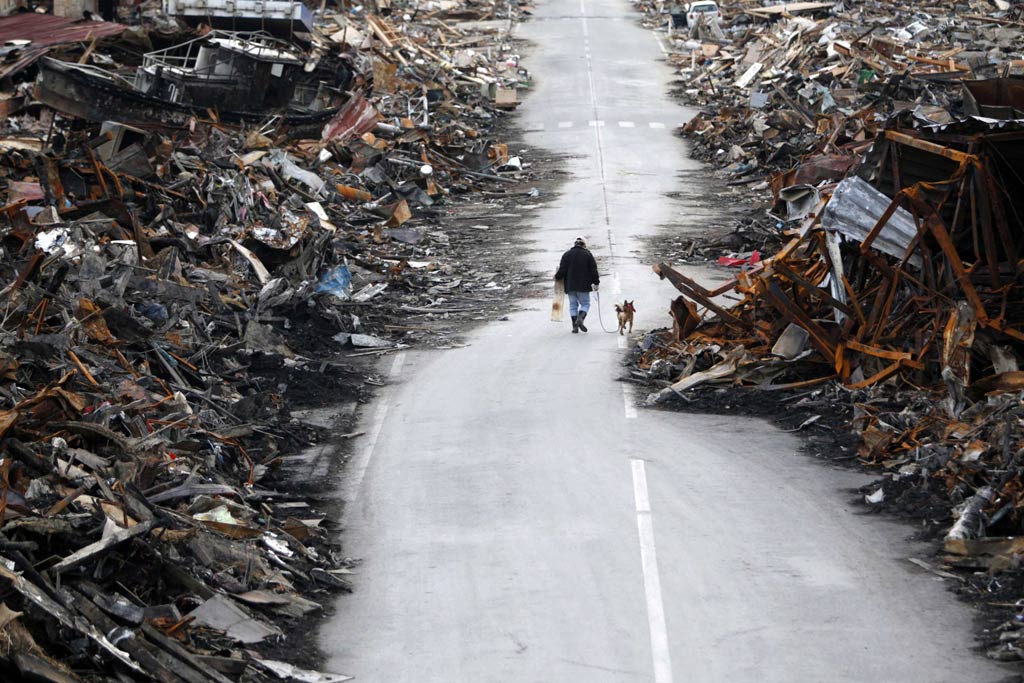
Six Minutes: The 2011 Tohoku Earthquake

The Tohoku earthquake and tsunami, as well as the subsequent meltdown debacle are events that I am lucky enough to have experienced first-hand, yet walk away from. I am obviously grateful for this, yet at the same time filled with sadness over those less fortunate than I, who were literally in the wrong places at the wrong time. I will never forget my experience on that day in March 2011.

1024x683xa017e0caf9119cc47e67297

I still remember it like it was yesterday. I had just left school after a long day of that particular brand of play-teaching one employs on 小学校 days, but by all accounts it was still a (brisk) beautiful day. After a quick zip down my favorite mountain back roads in my Subie, I stopped in at my office to check in and round off the day before following through on plans to hop on my motorcycle for a quick spin. Right as I began a fluffy conversation with the only other two folks in my department, things began to shake. This wasn’t particularly nerve-wracking; I’d experienced quakes before but always held them in this contemptuous light, openly mocking them on a regular basis. As the conversation shakily continued, the large overhanging 教育委員会 sign swung furiously, with no sign of letting up.

Normally, within a minute of starting up, things tended to settle down and people brushed themselves off, picked up the few things that may have fallen, and resumed their daily routines. On March 11, however, it was clear that this earthquake was only getting started. The old town hall building was sturdy, but soon the slight jiggle underneath my feet and the furious shaking of the signs merged together, and the entire building began lurching precariously. Two and a half minutes in and everyone knew that this was NOT a “normal” earthquake. The old ladies of the tea ceremony club and various office staff began gathering in the lobby of the building, unsure of what to do or where to go, but finding comfort amongst numerous others who felt the same sense of unsurety. When I could feel the heaviness of the floors above in my feet, I knew it was time to go outside to an open area immediately, if for nothing more than my own peace of mind.

Outside I watched the parking lot turn into Jell-O, as it wobbled like it had been plucked, along with the cars, trees, and street lamps attached to it. This point was the first time I had ever given any real consideration to the fact that I could possibly die on this escapist island paradise of mine. Noticing that no one had followed me out of the jiggling building, I resigned to see the rest of the situation through with my co-workers inside. After what seemed like an eternity, during which I was all but convinced that the old building we occupied would collapse around us, the shaking and rumbling subsided. After six minutes of uncertainty, things went back to normal. Or so it seemed. We all expressed our relief at the experience drawing to a close, and I went home for the day.

For me, the 2011 Tohoku Earthquake was a somber lesson not to trivialize or treat danger as a novelty, as well as another reminder that life is precious. Although I was shaken up, after those six minutes had passed, I was able to go home. I honestly didn’t realize that so many folks weren’t going to make it home, go to bed, and sleep off a bad day. Six minutes changed everything for them. The next morning, I woke up to the news of the tsunami and its devastation, and the developing crisis at 福島第一 , and only then did it strike me that the prior day’s rumbling was simply the tip of an iceberg that would change things for years to come.

Six minutes on March 11, 2011. How did you spend them?

-Namakemono

Random Thought Of The Day: Alpacas Are STOOPID Dope

Sometimes, I think some rather random things. I don’t know if they are worth sharing or appropriate (well, the answer is probably a resounding “NO” on both counts there, actually), but, now they’re out there. And you can’t unread them. You’re welcome. 
Maximus-May-2011

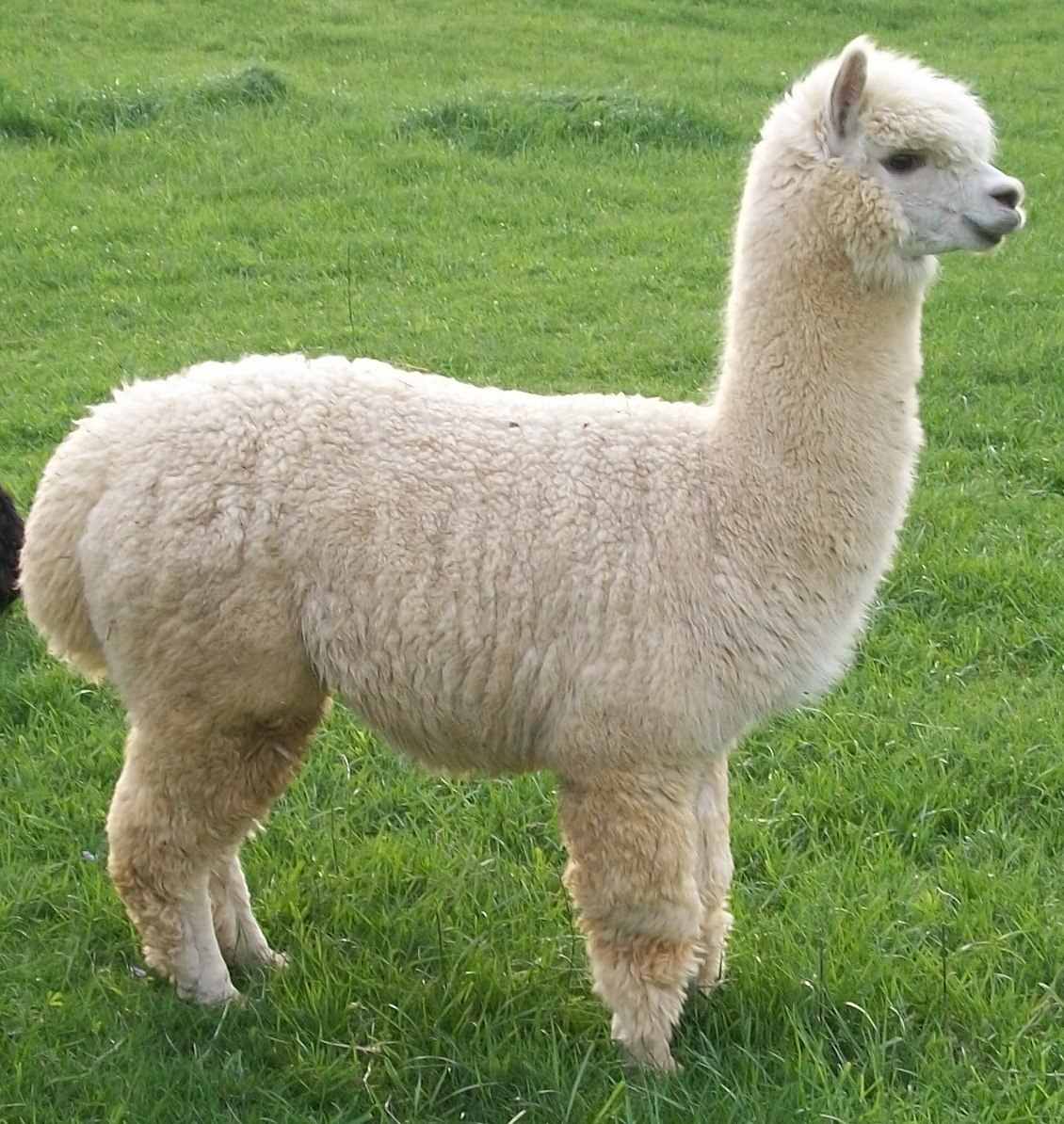
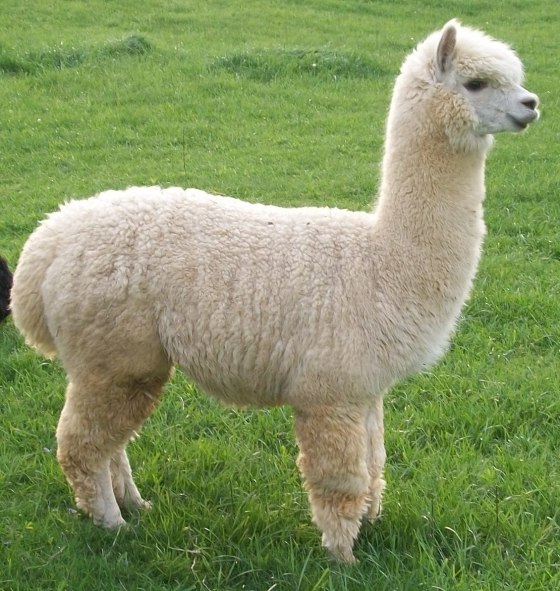
Alpacas are STOOPID dope.

I know, I know, but before you click away whilst thinking, “What are you talking about you doltish kumquat?!” Just hear me out. Because before you leave, I’ll have you saying “Alpacas are STOOPID dope” too.

Have you ever been to a petting zoo, the ones where they have all the animals people love (to eat) but really hope don’t come up and get stinky animal goo all over their good pants? You know, they fence them off and slap up a petting zoo sign, place a bucket of corn or something at the gate and overcharge for a handful of “animal feed?”

Like This

Like this one!

Time and again you go in, hoping that this time will be pleasant and that all the various meat-precursors on display will actually be clean, cute and  well-behaved. Instead, the ducks, chickens and geese squawk incessantly and the pigs think that everything attached to you is food and treat your clothes accordingly. The goats think that exact same thing, and that you serve a dual purpose as a stepping ladder (*cloppity-clop*, Oh you just dry-cleaned that? That’s too bad! *cloppity-clop*). The unsupervised little three-year-olds are having mind explosions and can’t sit still, and the cows and horses are TOO BIG. That’s right, TOO BIG. They scare me, so what (It’s a long story involving an actual rodeo that actually came to the South Bronx)!?

Cloppity-Clop.

Cloppity-Clop!

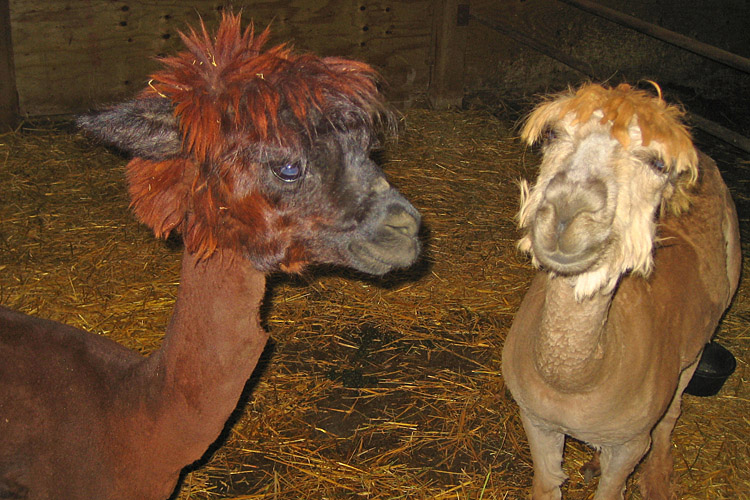
Then you have the llamas.  The llamas are dicks. Not only are they TOO BIG, they’re mean to boot. According to National Geographic Llamas are actually the South American cousins of camels, minus the hump. Native folks strap ’em up with loads of stuff and have ’em carry things all over the place.  They can survive on minimal sustenance, their poop can be used as fuel and they might just be pretty tasty. Also, their fur and hides can make leather and wool, so they can totally hook you up with that badass mountain man outfit you always wanted, yay! But it’s not all gravy, baby – because like I said, llamas are dicks. They can become stubborn, refuse to move or cooperate, and hiss and spit at you. SPIT AT YOU. So why are these animals even featured in petting zoos at all?

Yup.

Yup.

I don’t know, but their cousins, Alpacas, are STOOPID dope.

A few summers ago, while I was riding my motorcycle along through the mountain passes of Northwestern Japan, I happened to come across a little janky mountain zoo. My butt was tired and beaten up from the hours of abuse it took from my bike seat, so I decided to stop and have a look around and see what none of the fuss was about. I was pretty nonplussed about the whole thing; there were rows upon rows of rusty old cages, with animals spattered throughout, failing fences,  broken playground equipment and plenty of weeds growing through the cracks and patches. If it wasn’t for the old lady sitting at the entrance collecting a ¥250 per person donation, I would have guessed the place had been long abandoned.

Something's wrong with your face there, pal!

Something’s wrong with your face there, pal!

There was a cage full of monkeys, staring longingly at the mountains from which they came not even twenty meters away, yet as impossible to reach as if they were 2000 kilometers away. A little newborn, who knew nothing of the mountains hopped about eagerly in an unwitting bliss, pausing long enough to stare into my face through the bars, maybe wondering why it was brown instead of red like his.

Another cage held a tiny little mountain bear who looked too hot and exhausted to even swat at a fly, much less throw a glance my way. There were, of course, turtles, the obligatory peacocks, though none as impressive as one in my neighborhood whom I had lovingly dubbed “King Cock,” and chickens doing what those animals always do (squawk, cluck, poop – squawk, cluck, poop). Across the clearing from these animals was another row of enclosures that held the cows, horses, sheep, and goats.*Cloppity-clop*, TOO BIG – didn’t go.

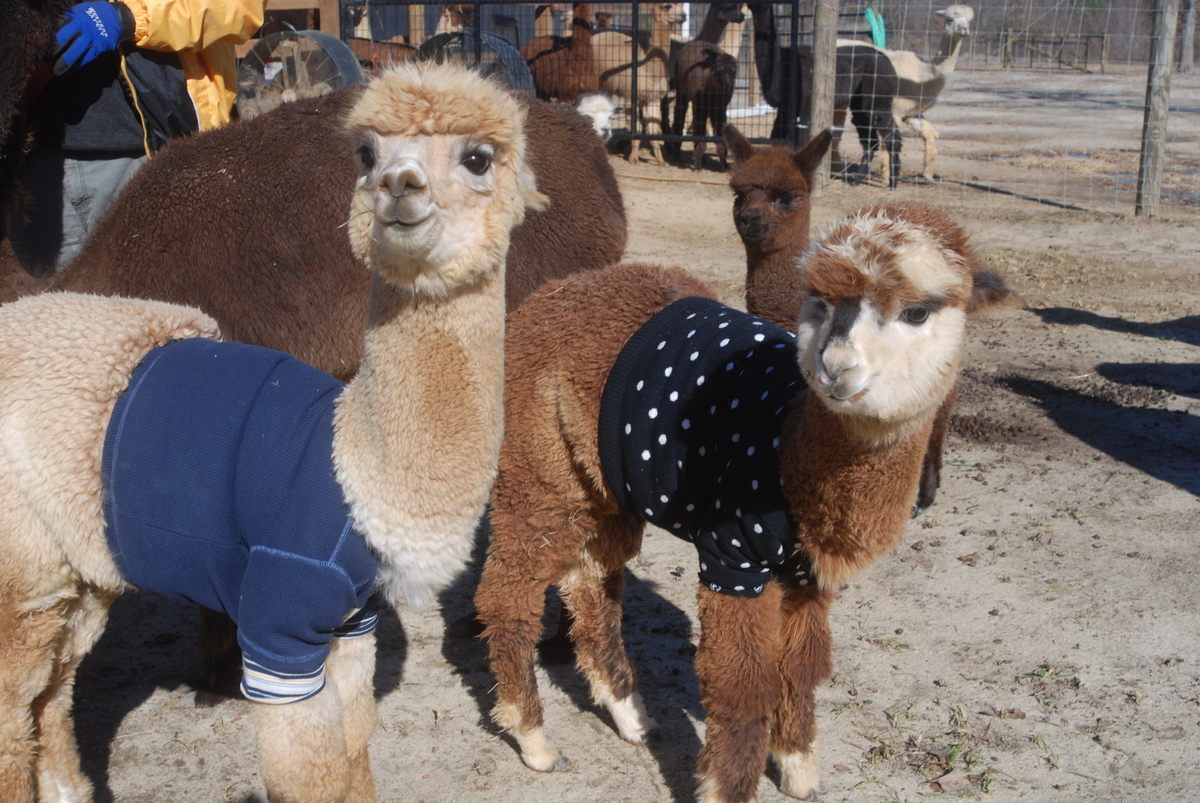
The real stars were behind all that in a modest enclosure that was surprisingly well maintained. On the right side of this enclosure was a lively herd of ostriches, who were in the middle of a high-speed endurance race and really letting the sand fly as they lapped each other, fighting for position in a race that didn’t end while I was there. More importantly, on the left side were the cutest, most awesome, bestest, coolest, adorablest animals on the planet – a pair of vanilla and chocolate no-longer-quite-baby alpacas.
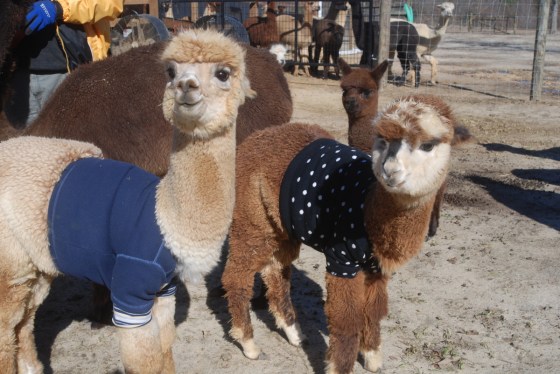
Cute as hell - These lil' guys would make even a hardcore gangster soft as baby shit!

Cute as hell – These lil’ guys would make even a hardcore gangster soft as baby s-*BEEPS*-t!

These little guys were really playful, but not rude about it at all. After feeding them, they followed me around the enclosure, which was super cute given their recently-shorn status – humming along happily, without spitting on or trying to step all over me. They were in general really friendly and didn’t mind being touched, and I was also surprised at how clean they were. You see, unlike all those other petting zoo-approved animals, alpacas take care to designate one spot as their bathroom and they all use that same spot, kind of like us humans. So their living area was free of poo, not smelly and pleasant to be in. It was almost a sad moment when closing time came and I had to say farewell to the little guys, and my cat (cute as he is) very narrowly missed out on having to find a new home, because if I could have taught one of those little dudes to sit on the back of my bike, he would’ve been gone!
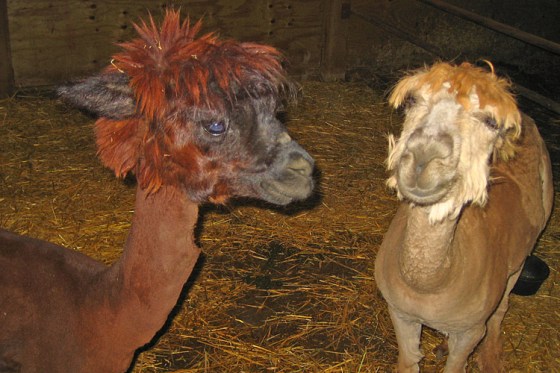
If you tell me you wouldn't be super giddy that these little guys were following you around, I WILL KICK YOU.

If you tell me you wouldn’t be super giddy that these little guys were following you around, I WILL KICK YOU.

Look, let’s be real here. Alpacas are camelids, like llamas, but smaller, fluffier, less aggressive, and much cuter. They have been bred by humans for thousands of years and have developed friendly personalities. They are neat and clean, easy to provide for and their wool is even finer than that of llamas. You could eat them, but why would you want to when they are so damn cute? The petting zoo might be a hectic, nasty, smelly, uncomfortable cesspool which people are somehow convinced to spend time inside of, and that basic fact won’t change. Stinky pigs will be pigs, rambunctious goats will be goats and chickens and ducks will squawk incessantly. Sheep will always be timid and cute, but dirty, and cows and horses will always be TOO DAMN BIG. But one minor change could bring a little less noise, a little less filth, a little more calm, and a lot more cute. Swap out those llamas for alpacas and the petting zoo might just become a place worth visiting. Maybe.

Which brings me to the conclusion of my rant, so say it with me!

Alpacas are STOOPID dope!
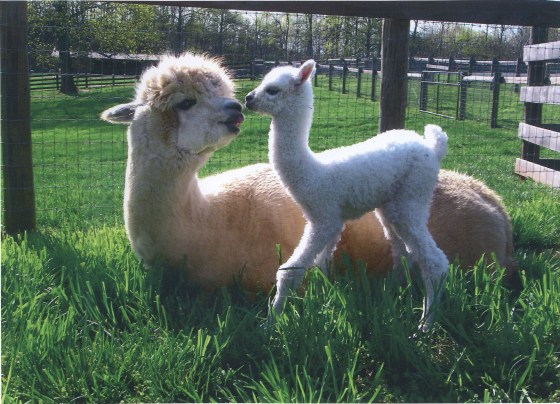
STOOPID dope.

Look how cute that is! STOOPID dope.

-Namakemono

The Top 8 Best NES/Famicom Games Ever

Image

Today represents a sad day for gamers across the world, as Hiroshi Yamauchi, the man who essentially kick started the home video gaming industry as we know it, passed away. Yamauchi was the President of Nintendo from 1949 until 2002, and oversaw the creation of what many consider to be the best video game console of all time: the Nintendo Entertainment System.

The NES, known as the Famicom (or Family Computer) in Japan, was launched on July 15, 1983 and was Nintendo’s first fully fledged console designed to play a myriad of games interchangeably. At the time, the gaming market was still reeling from the great video game crash of ’83, in which the popularity of home gaming dramatically declined due to the oversaturation of consoles and a lack of high-quality software to go along with them. Nintendo, originally a playing card manufacturer, had in recent years been involved in the development of minor video game consoles and handhelds such as the “Game & Watch” product line. It decided to take a risk by developing a gaming console which was nothing like the consoles before it: the NES.

The NES blew consoles such as the Atari 2600 completely out of the water, and revitalized the home gaming market with its’ high quality ports of arcade hits such as Donkey Kong and original titles which have since become some of the most beloved gaming franchises in the world.

During my time in Japan, I spent hour upon hour at this wonderful little Showa-era (1926-1989) store called Shi-Go-Nana, or C-57, which is a dagashiya. Dagashiyas usually sell cheap candy and trinkets to kids, like a corner store, but this particular place is special because it transports you back to that period of time when the NES came out. Sitting in a little corner of the store on a tatami mat in front of an old-school 1970’s television, I would spend hours playing NES classics.

As I heard the sad news about the man who engineered my gaming childhood, I was reminded of all the great times the NES had brought me, and came up with this list of the 8 best NES games of all time.While it was hard to narrow it down, in my opinion, these games have undoubtedly laid the groundwork for everything we love to see in our games today. Instead of being ranked, the games are in chronological order, as I feel that they all have unique merits and could each stand as the best. So as they say in Japan, “tanoshinde kudasai!” (Please enjoy!)

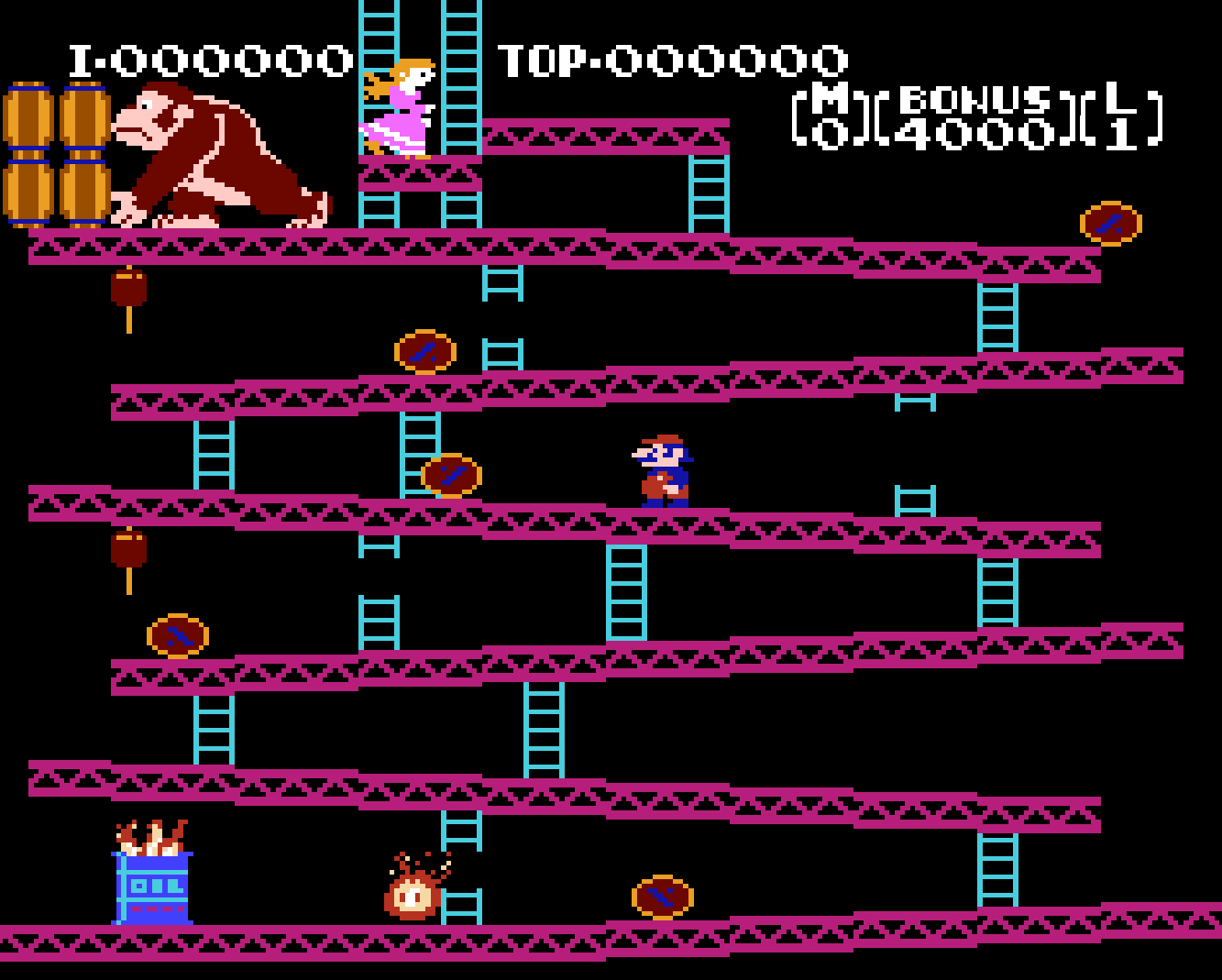
1) Donkey Kong, 1981

DonkeyKong2

Donkey Kong is the game that not only gave us the infamous hammer (bane to Super Smash Brothers players everywhere), but also some of the best known Nintendo characters: Pauline (precursor to Princesses Peach and Toadstool), Mario (known then as Jumpman), and of course, Donkey Kong. Making it to the top of the steel maze only to watch Kong take Mario’s girl again was the perfect combination of satisfaction and frustration.

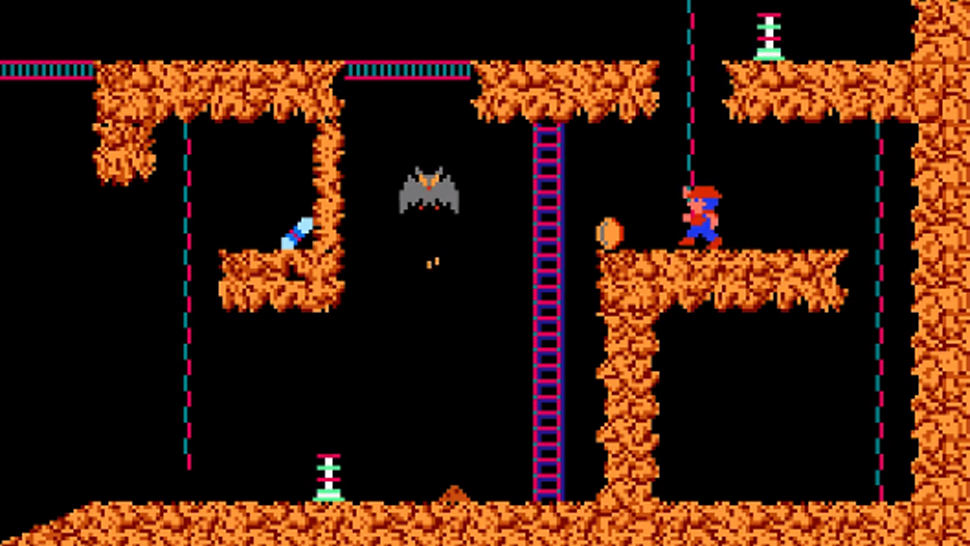
2) Spelunker, 1983

spelunker

Spelunker is definitely one of those classic games that lets you know you are playing the NES. You are a cave explorer with an incredibly low tolerance for pain, and you’ve got to make it to the treasure while avoiding numerous hazards, including bat poop. Spelunker required gamers to become pros at maneuvering the character, as even falling a little too far or jumping a bit too high would result in death. Highly frustrating, highly entertaining, pure NES.

3) Super Mario Brothers/Duck Hunt

supermarioduckhunt

Super Mario Brothers and Duck Hunt came packaged together as a dual game-pak, and each provided the perfect escape from the other after one too many fights with the Hammer Brothers or appearances by that snickering dog. SMB in particular introduced gamers to Nintendo’s revamped flagship character, Mario, and his universe of plants, pipes, and plumbing.

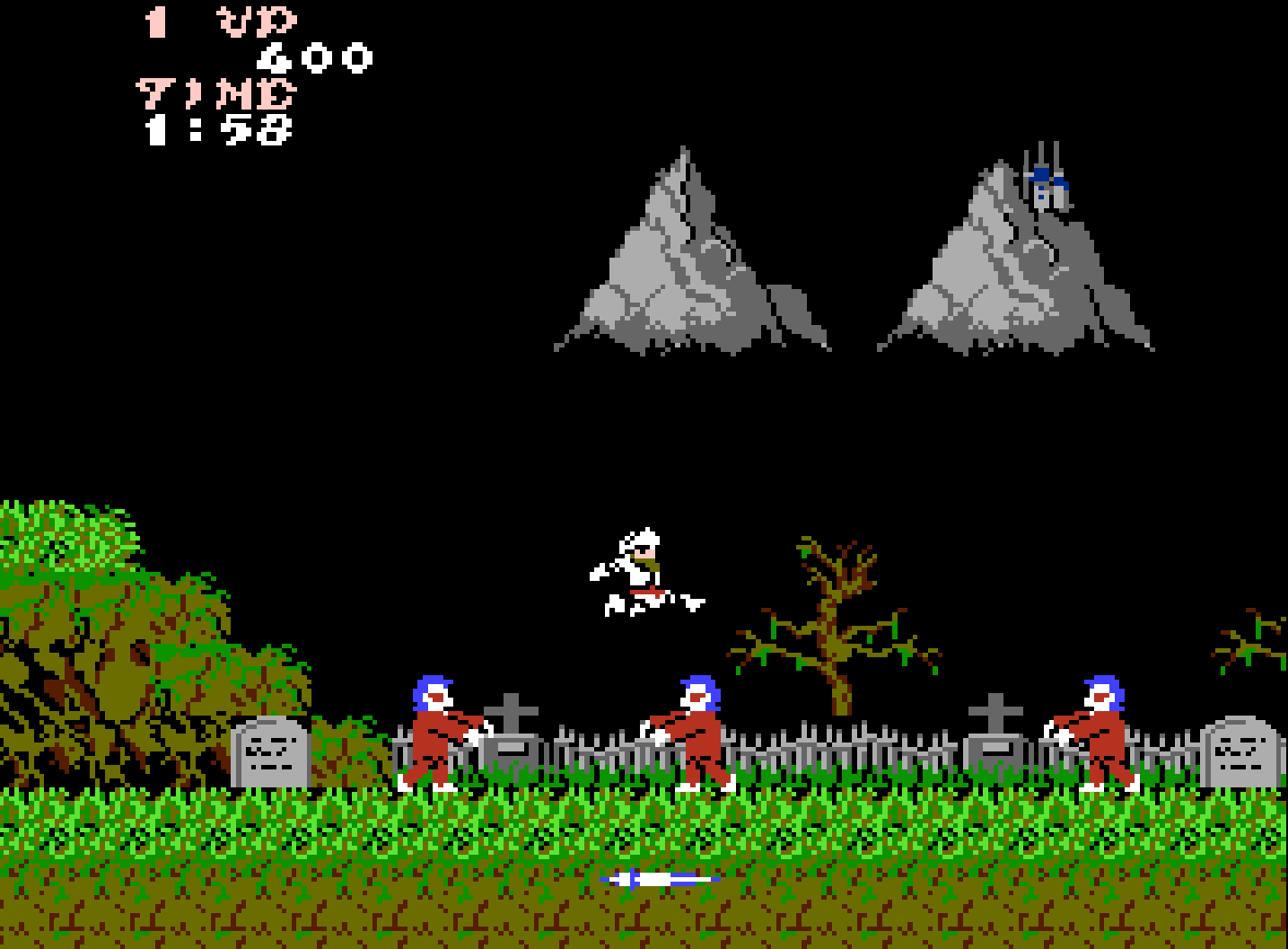
4) Ghosts ‘n Goblins, 1985

ghostsgoblins2

Ghosts ‘n Goblins introduced gamers to Sir Arthur, the knight with a major crush on Princess Prin Prin and a predilection for losing his clothes in battle. If players were lucky enough to make it past the Red Arremer in the first level, there were still plenty of challenges designed to test their gaming skills.

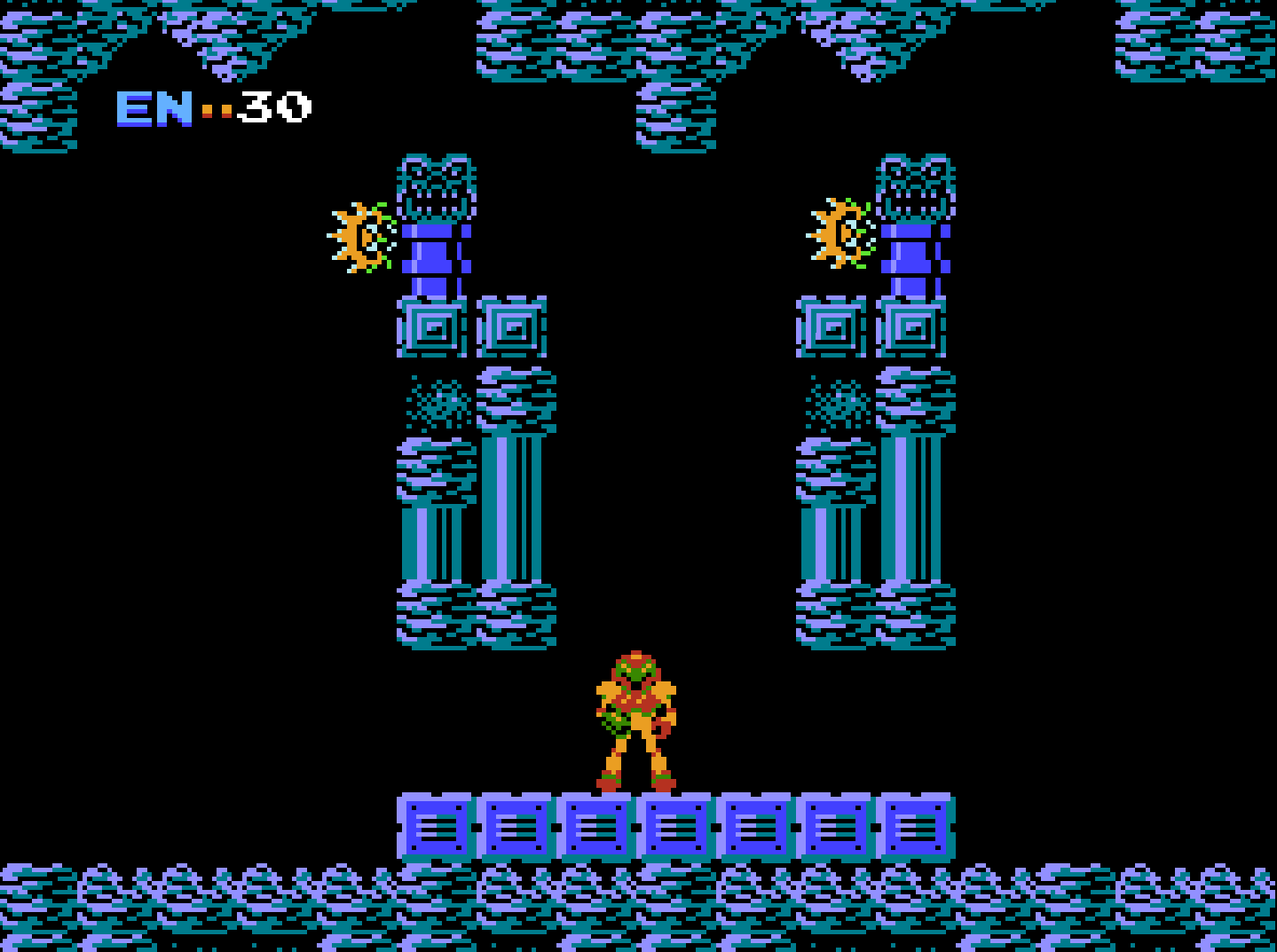
5) Metroid, 1986

metroid2

In Metroid, gamers took on the role of Samus Aran, an intergalactic bounty hunter determined to save the galaxy from the Space Pirates. This game combines elements of both Super Mario Brothers and Legend of Zelda, with a darker action-adventure story, and is notable for featuring one of the first female protagonists in gaming. One of its best known myths is the existence of an ending which features a naked Samus. Take a look at Game Center CX’s Arino, an old school game challenger, attempting to clear the game in order to test this myth.

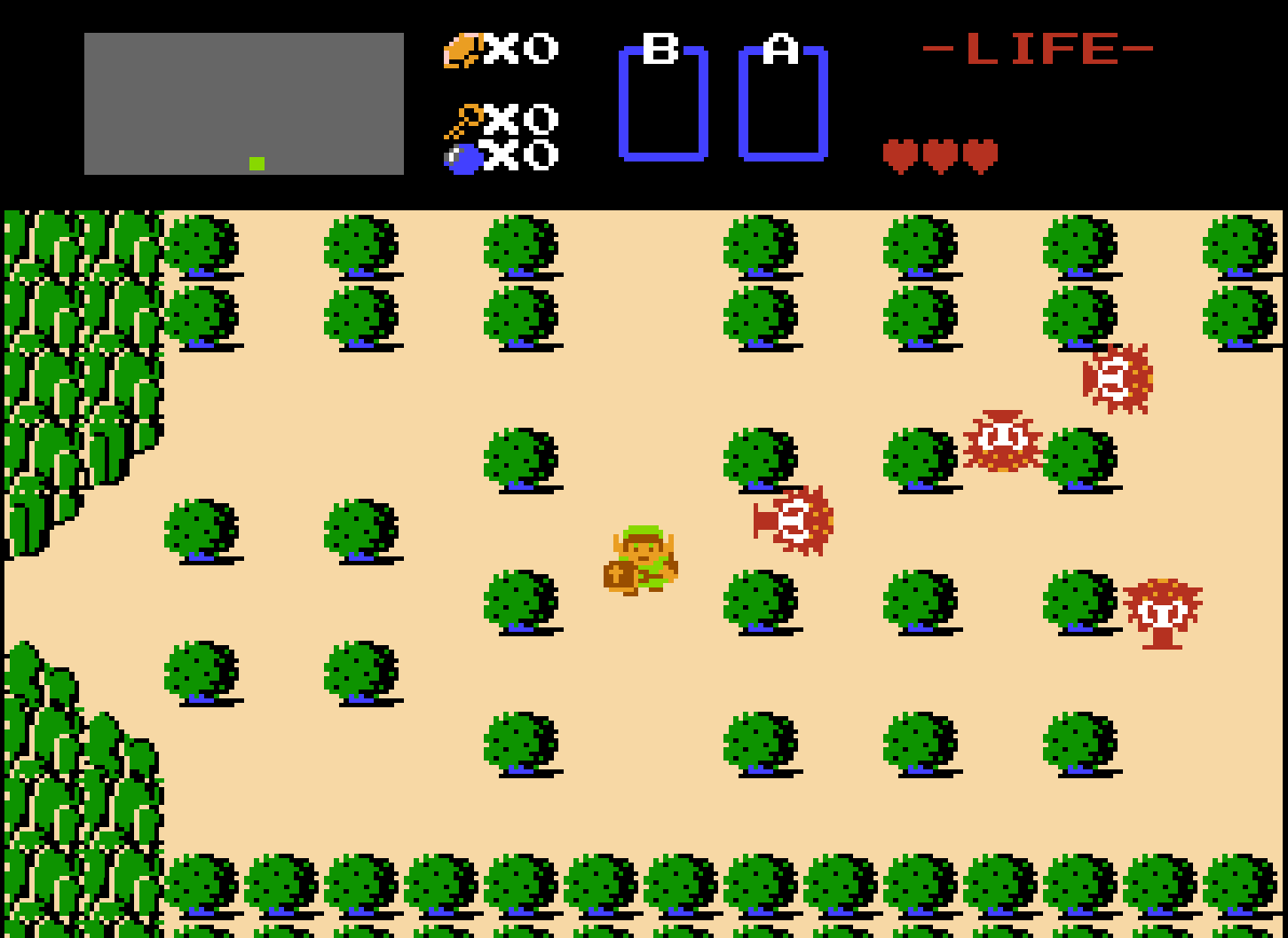
6) Legend of Zelda, 1986

Zelda2

Legend of Zelda marked the debut of one of Nintendo’s flagship characters, Link, and his never-ending quest to save Princess Zelda. What an altruistic guy! Its gameplay is a mix of role playing, action, and puzzle solving, and was able to appeal to a wide audience of gamers. To this day, the Zelda franchise is one of the most important to Nintendo, and the original is the fourth best-selling NES game of all time.

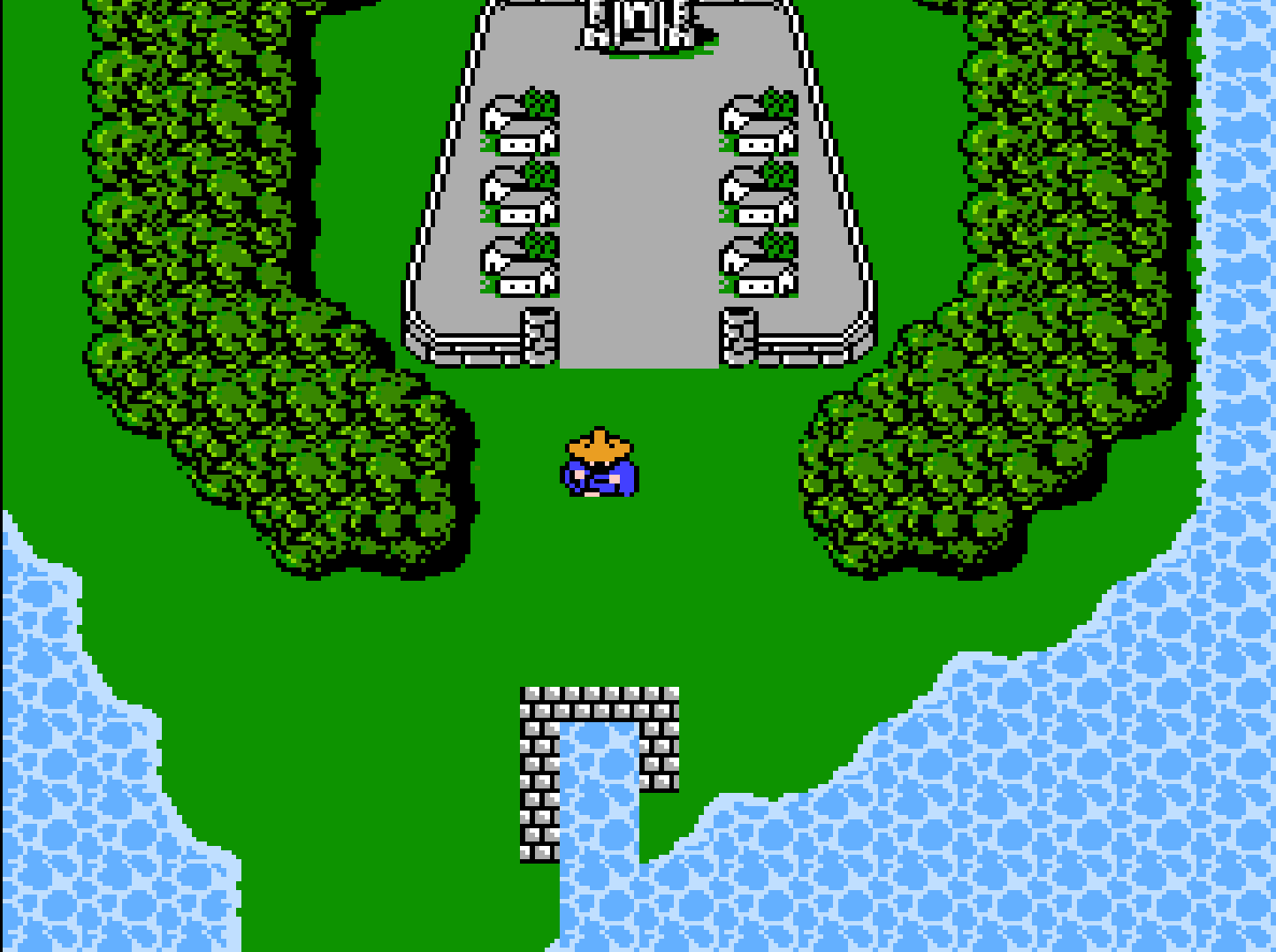
7) Final Fantasy, 1987

ff2

Final Fantasy, created by Hironobu Sakaguchi, has become one of the most well known franchises in gaming, but it all began back on the NES in 1987. It wasn’t the first RPG created, however it did popularize the genre and introduced to video games several features still existant in FF games today, including the notorious random encounter.

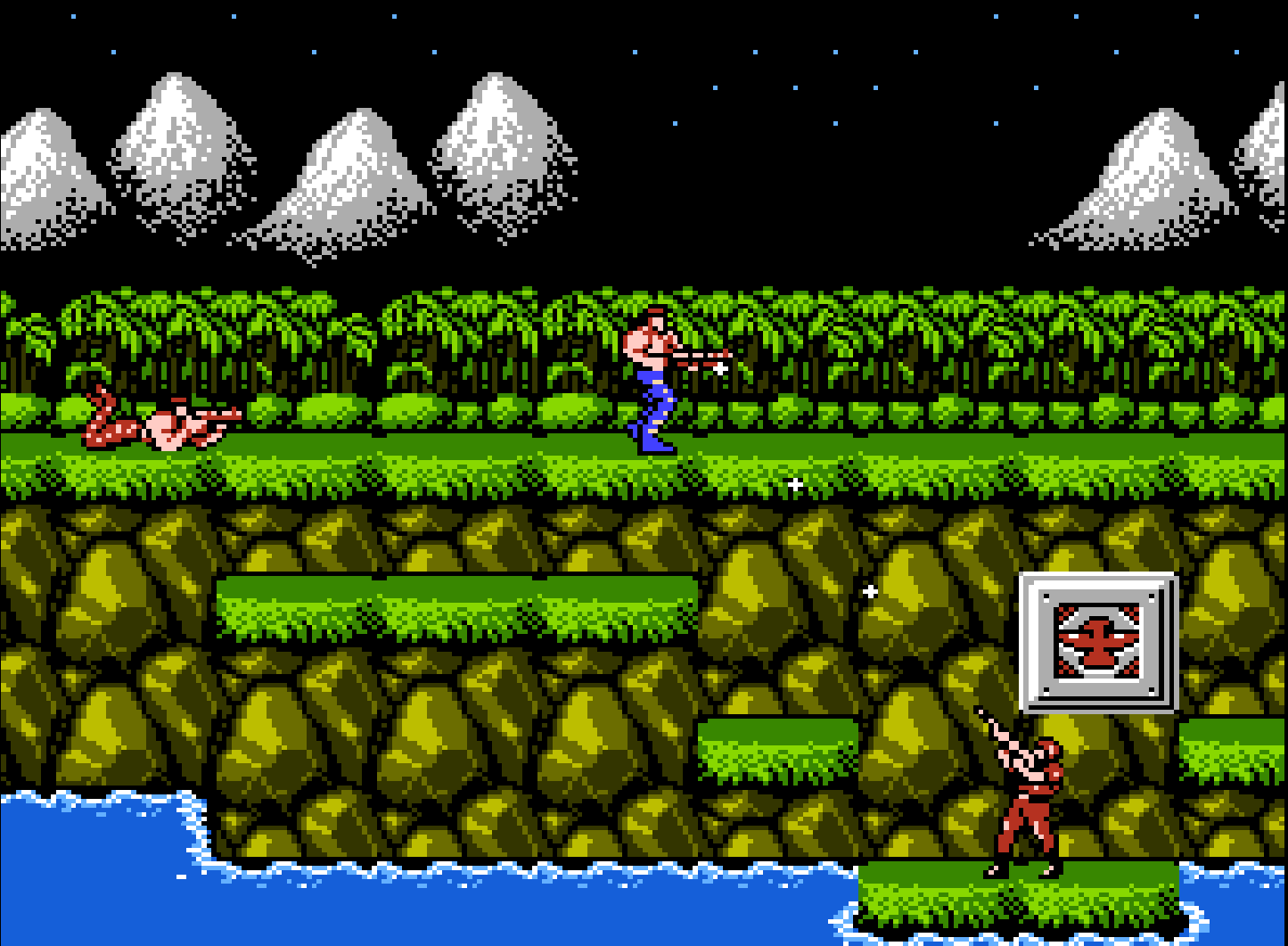
8) Contra, 1987

contra2

Up, up, down, down, left, right, left, right, B,A. Need I say more?

So, what are YOUR top 8 NES games of all time?

Published on .Mic

-Namakemono

Violent Video Games Did Not Make Aaron Alexis a Cold Blooded Killer

Image

By now it’s likely that you’ve heard the unfortunate news about Monday’s mass murder at the Washington Navy Yard.  You’ve probably seen images of the man responsible, Aaron Alexis, and collected bits and pieces of information as it was made available. You may know that 13 people, including the gunman died. Maybe you’ve also learned that several people were injured as well, and watched their names scroll by on your television as the political pundits of the evening emotionlessly expressed their “heartfelt” sympathy and outrage.  Perhaps you’ve also been told that Alexis was an avid, almost obsessive player of violent video games, which may have caused him to commit this mass murder.

It is an undeniable fact that Alexis is a killer, guilty of murdering 12 innocent people and injuring several others who were simply in the wrong place at the wrong time, and it would be an insult to them to say anything otherwise. To suggest, however, that a video game or other form of entertainment is ultimately responsible for his heinous act is an insult to innocent Americans and an irresponsible denial of the ramifications of our overzealous gun culture.

Video games, music, films, and indeed most forms of media have been the target of censorship for probably as long as these methods of sharing stories have existed. Looking back over the lifetime of most millennials, you’ll see the introduction of restrictions upon music with explicit lyrics, content ratings for television shows and video games, and going back to the first half of the 20th century, rating systems for films as well.

Many of these were created with the goal of preventing content deemed unsatisfactory from influencing the attitudes, opinions, and behaviors of American society. For example, the parental advisory label which can be found on many albums today is a reaction to content from artists such as Prince and Ice-T, which were often derogatory and featured vivid depictions of violence and sexuality. At the time, leaders of the movement in favor of these labels, such as Tipper Gore, argued that being exposed to these vivid depictions would result in an increase of violence and a loosening of sexual morality amongst American youth.

While this could be true, the fact of the matter is that worldwide, most millenials, having grown up steeped in technology, have found ample opportunity to listen to whatever music they want, play whatever games they like, and indeed consume whatever media they choose despite the restrictions placed upon them. What is dramatically different in America, compared to other countries, is the level of real world violence that occurs around them.

Take Japan for example. In 2012, at least five of the top thirty best-selling video games were from franchises known for their violent themes and depictions of explicit behavior. Resident Evil 6 was the fifth most popular game that year. However, there are nearly 200 times more murders with firearms in America than Japan. In 2002, there were 47, compared to 9369 in America. The overall crime rate is significantly lower as well. The same goes for Great Britain. In fact, there are nearly 670 times more murders with firearms in America than Britain.  If Japanese and British citizens, and indeed people from any other country are for the most part consuming the same types of media, yet live with significantly lower murder rates, then the problem isn’t the entertainment, but clearly the culture of violence, or lack thereof.

In five years of living in Japan, I noticed that more people were genuinely concerned when a local convenience store was robbed at knifepoint, than at home in the Bronx when a shooting occurred in front of the local bodega. There was a desire to ensure that everyone involved was alright, and it was entirely unthinkable that something of this nature could ever happen. This is because from a young age, Japanese people are taught to respect each other and to resolve their issues through working together. More importantly, guns are outright illegal, and the concept of achieving your goals at the expense of another person’s safety or wellbeing is not accepted.

In fact, in America, it is the ease with which we accept real life violence and the eagerness to hurt others in order to secure our own prosperity that is in large part responsible for situations like that at the Washington Navy Yard. America is an incredible country and our free spirit is a large part of what made America what it is today, but without change, it will crumble apart from the inside out. Moving forward, Americans must stop blaming films and video games for the violent incidents that time and again hit the nation at its core, and learn to embrace the best practices of our global neighbors.

Published on .Mic

-Namakemono