Just so you know, it’s going to be a bit before I get into the meat and potatoes here (and you read the point, which I’ve articulated in the title) because I’d like to take a bit of space and explain my opinion of the behemoth that is the Grammys and how I feel about awards shows in general. Now then:
Sunday Night’s Grammy awards ceremony was the type of show that some folks would call memorable, featuring your typical “star-studded” performances, “touching” acceptance speeches, and even Pharrell’s bizarro hat (which magically became self-aware halfway through the show, quickly thereafter establishing its own Twitter account). Earnestly speaking, there were a number of entertaining moments – bursts of passion and wit interlaced with nostalgia and panache – that will hijack the zeitgeist for weeks to come (at least until the Oscars mounts its campaign to upstage and outdo).
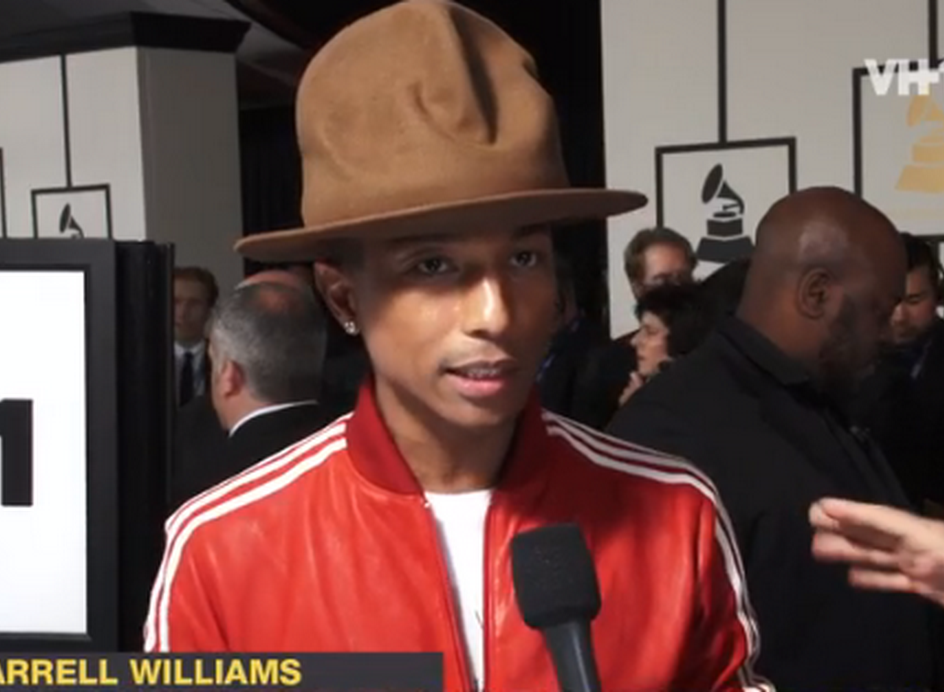
Neat hat, buddy
Now, I’m not a fan of awards shows and the Grammys are no exception to this rule. I don’t hate music or the celebration of passionate artists and incredible talent; however, for me, watching an awards show is a bit too similar to self-flagellation. The acceptances all feel trite, especially when winners feel obligated to name drop everyone they have encountered since birth; the performances are canned and irrelevant (although to my pleasant surprise Beyoncé performance was incredibly sexy and mesmerizing to watch, as was Pink’s Cirque du Soleil routine), and the fashion and drama always upstage the actual art itself.
Perhaps the worst part of an industry award ceremony such as the Grammys is the lack of impartiality demonstrated when selecting nominees and winners. For example, Hattie McDaniel, the first Black Oscar winner, received the award ten years after the tradition began, and it was fully 24 years before another Black person would win (Best Actor by Sidney Poitier; another significant first). The issue standing between non-white nominees and victory was not talent, but a lack of respect and recognition, and it still plagues today’s Academy Awards (and will likely be a prime factor should Steve McQueen fail to win Best Director this year).

Because seriously, how could this guy NOT win Best Metal Performance?!?
From a Grammy-centric perspective, a prime example would be the 1989 upset in the Best Hard Rock/ Metal Performance category that saw Jethro Tull win out over Metallica, exposing the flaws of the voting process. At the time, Metallica was arguably the face of Metal and had been pushing and expanding the genre by leaps and bounds with every release. Unfortunately for them, Grammy voters were disconnected from the state of Hard Rock and Metal in 1989 and did not take into account the meaning of the newly created category, leading to misclassified prog rockers Tull taking the award.
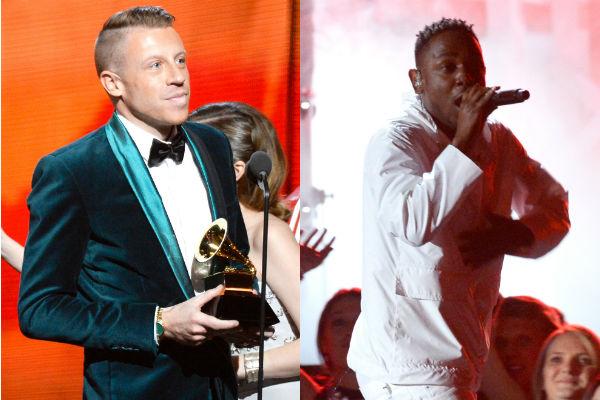
The 2014 awards saw a similar situation happen to up-and-coming rapper Kendrick Lamar, who arguably (and hands-down, in my opinion) released the best Hip-Hop album of 2013. Lamar was nominated in 7 categories, most importantly Best New Artist, Album of the Year, and Best Rap Song. His elevation to Hip-Hop legend was halted in its tracks when another fresh face, Macklemore, swept the rap category.
Let’s not deny Macklemore his due; the Seattle rapper (along with his creative partner Ryan Lewis) put together one of the most popular albums of 2013, and several of the songs on the album became hits. His hard work and persistence has paid off, and he is more than entitled to enjoy his success. However, insofar as his brand compares to Lamar’s, he is more mainstream-friendly and his style invites crossover appeal as much as his skin color does. The widespread recognition of Macklemore as a brand, combined with out of touch voting procedures means that in all likelihood, his work was judged less for its artistic merit and more for his popularity (the same can be said of Lamar’s case as well, with less appealing results).
Judging the artists upon their body of work alone, the Professor presents a more laid back and tempered flow than K.Dot, although his lyrics are imbued with passion and feel genuinely meaningful to him. The music behind his words is generally poppy and anthemic, and overall, Macklemore stands firmly in hipster territory (which isn’t necessarily a bad thing; it’s just his thing).
K.Dot, on the other hand, is like the only soldier of a one man army, on a mission to shake the Hip-Hop world to its core, and rebuild it in his image of perfection, or burn out trying. His flow can be tender in one verse and blunt in the next; laid-back and comical, or acutely intellectual. K.Dot has a very focused brand of intensity, and knows how and where to push his listeners’ buttons to hit them with a wall of sound reminiscent of Nas and the stripped down, fit lady that Hip-Hop once was. Between these two artists, in terms of creating an experience that must be, well, experienced, and pushing rap as an art form, Kendrick Lamar is firmly in the lead.
Of course, a Grammy represents more than just technical proficiency; it is the type of award which takes the entire performer, intangibles and all, into account. Because of this, despite whatever shortcomings anyone (myself included) may perceive in Macklemore’s musical abilities, the sum total of his brand stands on equal footing with Lamar’s (and the other nominated performers as well), at least in the Album of the Year and Best Rap Song categories.
Indeed, the biggest disservice to Lamar came in a category which superseded Hip-Hop: Best New Artist. Not only was Lamar featured in collaborations with a number of popular artists of various genres, he also delivered some of the most lyrically and musically appealing songs released in 2013. And then there was “Control.” In one fell swoop, Lamar put the Hip-Hop world on notice that he was going to fight tooth-and-nail to create his legacy, even if that meant destroying a few in the process.
Lamar specifically took aim at a number of popular artists (including some he counts as friends), and did so with an immaculate clarity and intensity that any of them would find hard to counter. Instead of playing second fiddle as a guest on Big Sean’s summer hit, Lamar stole the spotlight and delivered (in my opinion) the best 32 bars of the year, hands down. That said, I believe that Lamar demonstrated the greatest potential and presented the most entertaining and meaningful brand, and for this effort if nothing more, he deserved to receive Best New Artist, especially over Macklemore.
Fortunately for everyone, the future looks very bright for K.Dot – if he can continue to release high quality material, and push his own and others’ limits (and all indications are that he can and will), he will receive every bit of recognition due him sooner rather than later.
As far as Macklemore is concerned, well, his next step should be to STOP apologizing for beating Kendrick Lamar. In the end a win is a win. Listen to what the Professor himself had to say to Hot 97’s Peter Rosenberg about the whole Grammys blowout situation:
-Namakemono
 Namakemono no Manifesto